Why Everyone Wants a Singer Porsche

– 3 min read


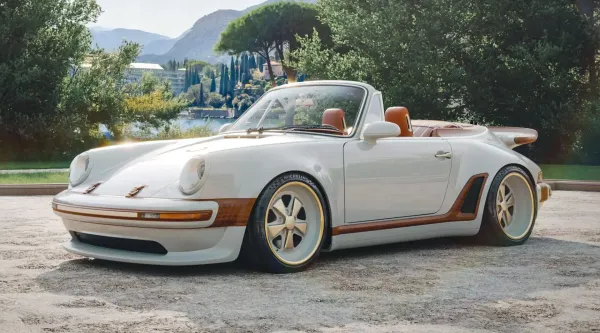
A Singer Porsche is not really about owning an old 911.
It is about owning an idea of what the 911 could have been if almost every compromise imposed by age, manufacturing and period technology were reconsidered.
That distinction has turned Singer Vehicle Design from a specialist restoration company into one of the most influential names in modern car culture.
Singer began in California in 2009 with the air-cooled Porsche 911 as its subject. The process still begins with an existing Type 964 Porsche 911 supplied by its owner, which is then restored and reimagined according to the chosen programme and individual specification. Singer itself is careful to describe these cars as Porsche 911s restored by Singer rather than newly manufactured Singer cars.
That matters because the original car remains central to the attraction.
The proportions are familiar. The upright windscreen, round headlights and compact body instantly register as 911. Yet almost everything has been reconsidered. Engines are developed further, bodywork can be remade in carbon fibre, suspension and brakes are modernised and interiors are finished with the level of detail more commonly associated with luxury furniture or watchmaking.
The result sits in an unusual space between restoration and reinvention.
Traditional restoration often aims for historical correctness. The closer the car returns to its original condition, the more successful the work is considered.
Singer asks a different question.
What if the qualities people love about an old 911 could remain while many of its limitations disappeared?
That philosophy has produced increasingly ambitious interpretations, from the early Classic restorations to the Dynamics and Lightweighting Study and turbocharged programmes. Current Carrera Coupe and Cabriolet restorations can use a naturally aspirated 4.0-litre flat-six developed with engineering support from Cosworth, while retaining a manual gearbox and rear-wheel drive.
The attraction is therefore not simply retro design. It is selective nostalgia.
The noise, proportions and physical interaction remain. Weak brakes, old electronics and decades-old engineering do not necessarily have to.
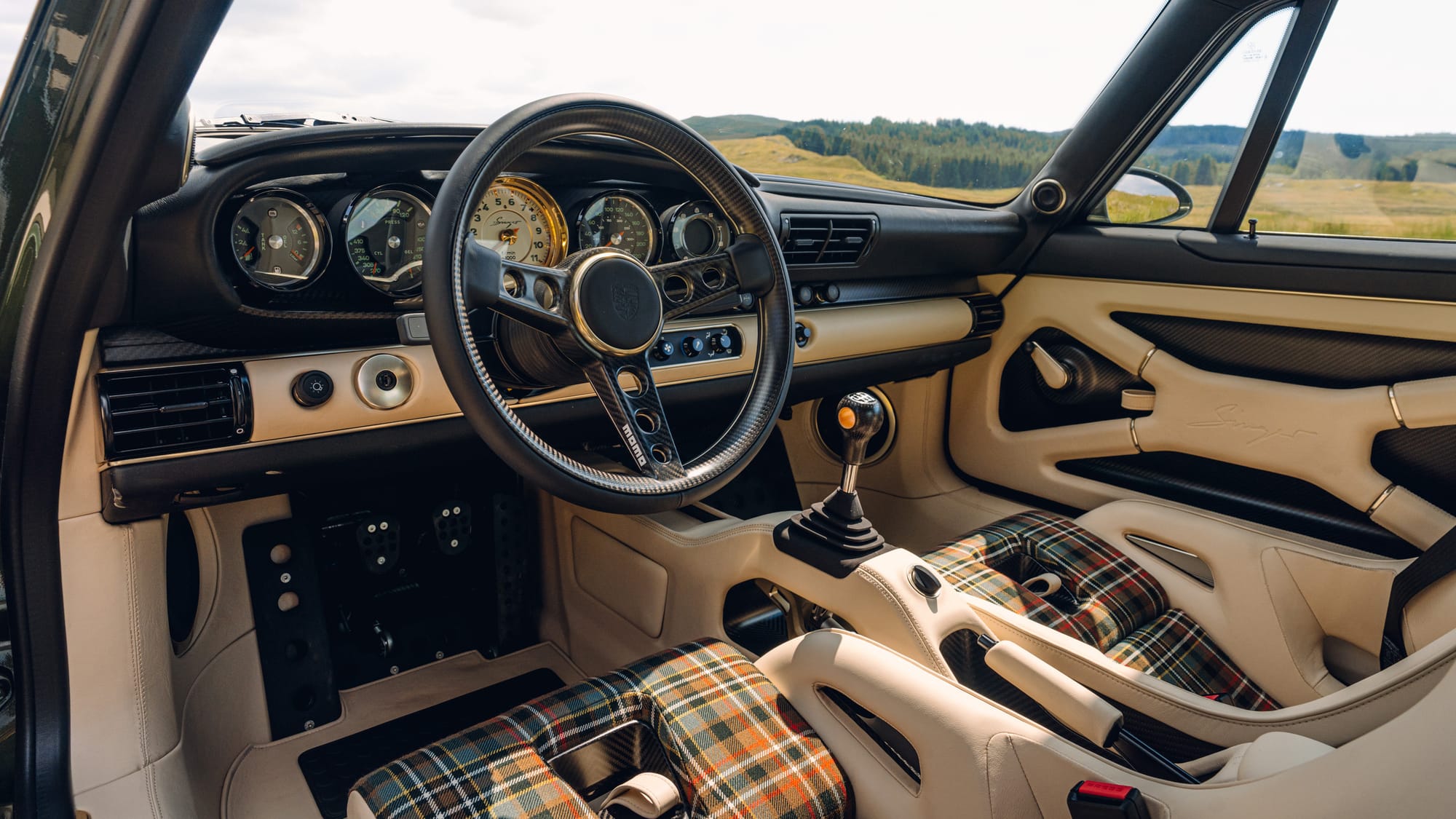
Singer also helped change the language around restored cars.
A dashboard knob, engine bay, seat weave or piece of metal trim can receive the same attention as the larger mechanical work. The company describes its approach around detail, personalisation and a pursuit of excellence, with each restoration tailored around an owner's preferences.
This is one reason the cars appeal beyond traditional Porsche collectors.
They sit comfortably beside architecture, furniture and fashion because the visible craft is part of the proposition. Even people who would never discuss compression ratios can understand beautifully machined switches, carefully chosen leather and unusually precise proportions.
That crossover became particularly visible in August 2026, when Singer and Louis Vuitton revealed two collaborative Porsche 911 restorations at Monterey. The project connected Singer's automotive approach directly with the language of luxury fashion and travel.
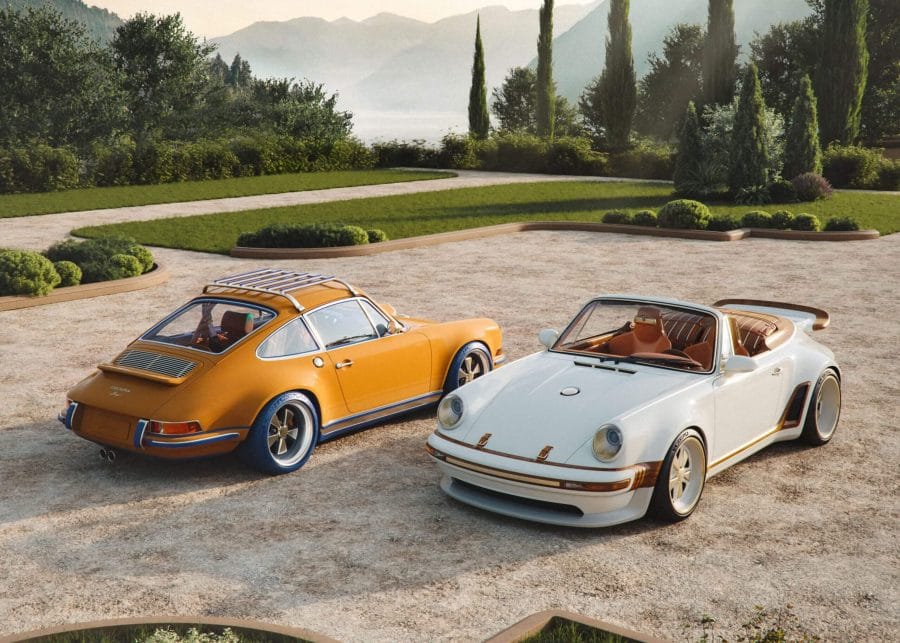
Singer arrived at exactly the right cultural moment.
Collectors are increasingly interested in analogue cars, personalised objects and products whose value lies in workmanship rather than novelty alone. At the same time, modern performance cars have become so capable that technical superiority is no longer sufficient to create emotional distinction.
Singer offers something more personal.
It takes one of the most recognisable sports-car shapes ever created and makes it feel specific to one owner, while preserving enough history that the object still carries a past.
Perhaps that is why the cars are so desirable. They do not ask whether old or new is better.
They simply take the most seductive parts of both.