
The Yves Saint Laurent Mondrian Dress – When Fashion Borrowed from Art
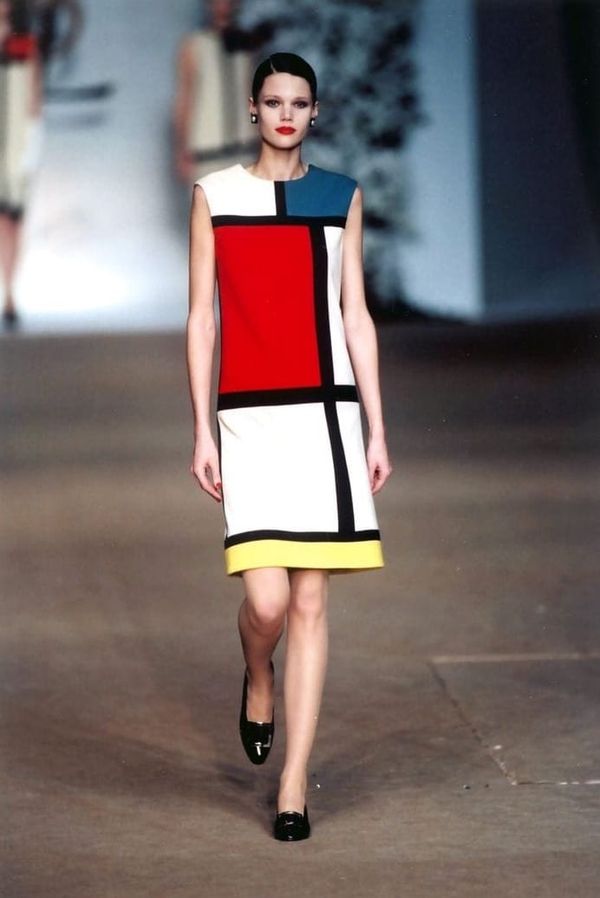
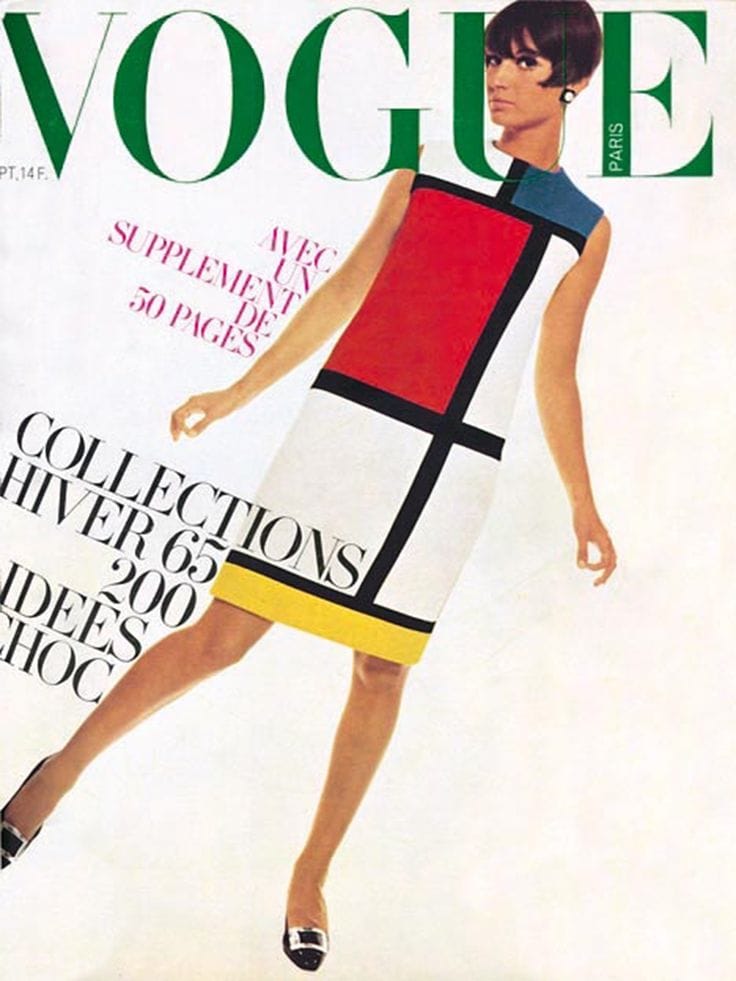
In 1965, Yves Saint Laurent took one of the most recognisable languages in modern art and placed it on the body.
White fields. Black lines. Blocks of red, blue and yellow.
The result became known as the Mondrian dress, although describing it simply as a painting transferred onto fabric misses what made the design interesting.
Turning a flat image into clothing
Saint Laurent was inspired by the work of Piet Mondrian while developing his autumn/winter 1965–66 collection. The apparent simplicity of Mondrian's compositions suited the flat, geometric shape of the contemporary shift dress, but reproducing the effect on a moving body required considerable construction.
The coloured areas were not simply printed onto the surface. Separate sections of wool jersey were pieced together, with shaping hidden within the grid of seams so that the geometry remained visually clean when worn. The Metropolitan Museum of Art describes this construction as a key part of the achievement.
That technical distinction is important.
Saint Laurent was not merely reproducing a painting. He was translating one medium into another.
Fashion looks at art
Designers had borrowed from artists long before 1965, and they have done so constantly since. The Mondrian collection nevertheless became one of the clearest examples of the relationship because the reference was immediately recognisable.
It also arrived at the right moment.
The boundaries between art, graphic design, interiors and fashion were becoming increasingly porous. Modernism had created a visual vocabulary that could move easily from canvas to architecture to furniture. Saint Laurent demonstrated that it could move onto clothing as well.

The dresses were an immediate success and became closely associated with the designer. Museums began treating them as significant objects unusually quickly; the Kunstmuseum Den Haag notes that Mondrian dresses were already being shown alongside the artist's paintings in 1966.
The difference between reference and imitation
The reason the dress still matters is that it did not simply borrow an image.
It understood the structure behind that image.
Mondrian's work depended on balance, proportion and the tension between line and colour. Saint Laurent used those same principles to control how the eye moved across the body.
That is why the dress feels coherent rather than novelty-driven. Remove the art-historical reference and it remains a remarkably strong piece of fashion design.
When fashion becomes part of art history
The exchange eventually worked in both directions.
Saint Laurent used Mondrian to create fashion, while the success of the collection introduced many people to Mondrian through fashion. The Met notes that the collection contributed to renewed attention around the artist in France during the following years.
That makes the dress something more complicated than either a reproduction or a tribute.
It is an example of what happens when creative fields borrow from each other successfully: neither object remains quite the same afterward.