Concrete was not supposed to become luxurious.
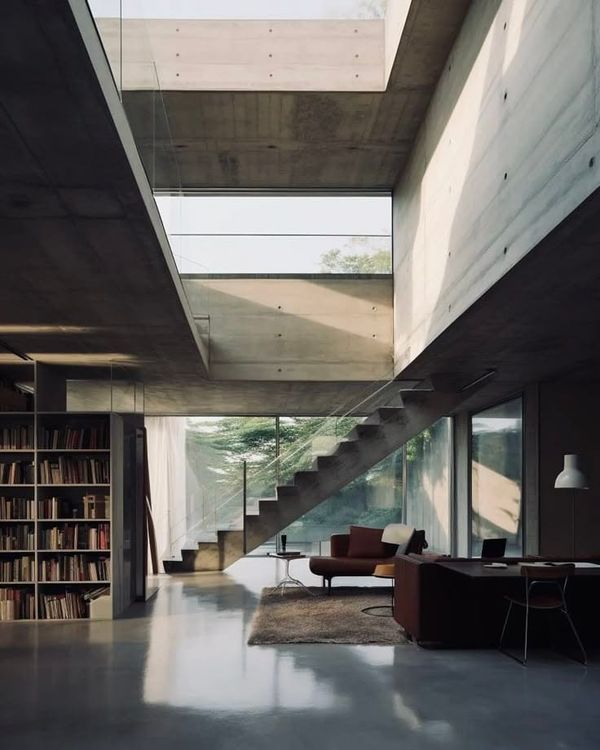
Brutalism developed around directness: exposed structure, heavy materials, monumental forms and buildings that often made very little attempt to appear polite.
For decades, the style could feel almost anti-luxury.
Today, its language appears in some of the world's most carefully designed homes, hotels, stores and furniture collections.
From civic architecture to private retreat
Part of the transformation comes from scale.
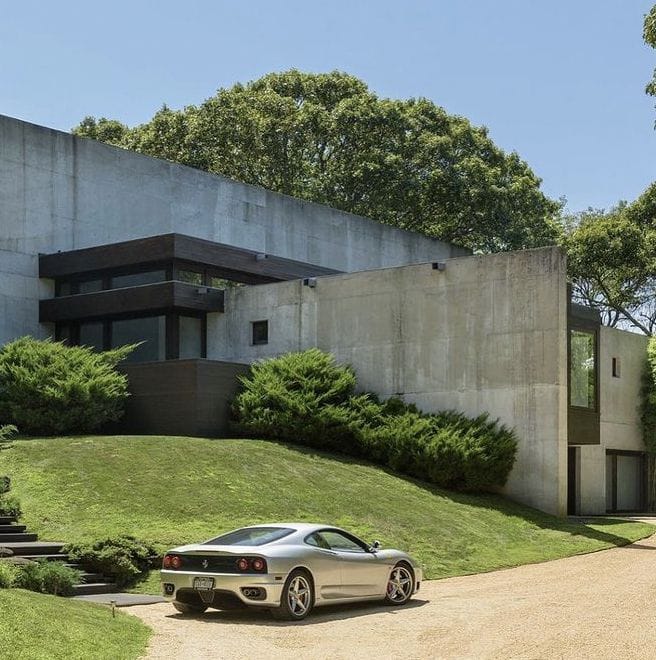
A vast concrete civic building and a carefully detailed concrete house may use the same material but create completely different experiences. In a domestic setting, heavy walls can produce privacy, silence and extraordinary control over light.
The qualities once described as severe begin to feel protective.
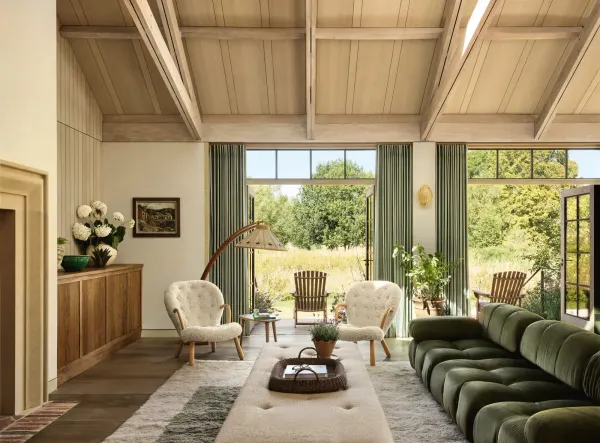
Designers have also softened the language. Contemporary brutalist interiors rarely consist of concrete alone. Raw stone is paired with timber, linen, leather and warm lighting. Sculptural furniture gives large architectural spaces a human scale.
Architectural Digest was already documenting Brutalism's movement into furniture and interiors several years ago, noting the spread of raw materials and strong geometric forms beyond architecture itself.
Material becomes the decoration
Luxury interiors traditionally relied heavily on applied finishes: polished surfaces, decorative mouldings, expensive fabrics and visible craft.
Brutalism offers a different proposition.
A wall can be the finish. Stone can remain stone. Concrete can show the trace of its formwork. Instead of adding decoration, attention shifts toward proportion and material quality.
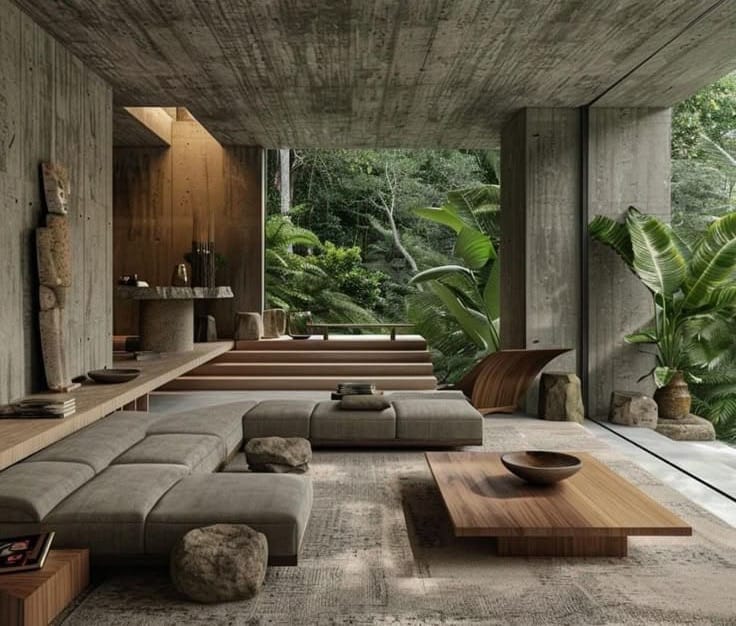
That apparent simplicity can be extremely expensive.
Casting flawless architectural concrete is demanding. Large stone elements require engineering. Minimal junctions often take more work than decorative ones because there is nowhere for mistakes to hide.
The irony is familiar across contemporary luxury: making something look raw can require enormous refinement.
Why it feels right now
The return of Brutalism also reflects fatigue with interiors designed primarily to be agreeable.
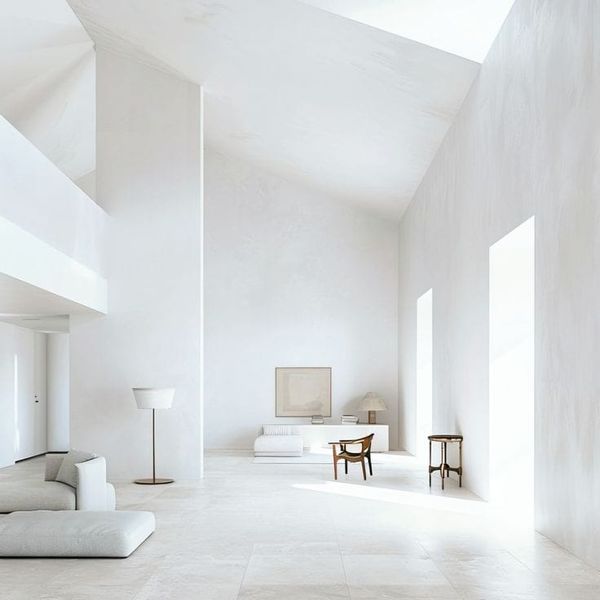
After years of pale neutral spaces, there is renewed interest in rooms with stronger identities. Deep stone, heavy forms and darker materials create atmosphere immediately.
Recent interpretations are often called soft Brutalism, precisely because they preserve the architecture's weight while making it more comfortable to inhabit.
This is not a return to concrete bunkers.
It is a selective borrowing of Brutalism's confidence.
Luxury no longer needs to look delicate
Perhaps that is the most important change.
Wealth was once communicated through precious surfaces and obvious craftsmanship. Contemporary luxury can also be expressed through space, silence and mass.
A single monolithic stone basin can carry more visual authority than a room full of decorative finishes.
Brutalism became luxury not because its original values changed, but because luxury did.